In a significant move for the housing industry, Nick Woolley has been appointed to the Advisory Board of the newly established Policy Liaison Group for Future Homes (PLG for FH). This group is a cross-party forum uniting parliamentarians, government, and construction sector SMEs to help steer the policy agenda on decarbonising buildings. They will share their collaborative expertise and experience to play a major role in shaping the future of housing standards in the UK. This will be particularly so in the context of retrofitting existing buildings as well as establishing new build standards that meet the rising expectations of sustainability and comfort.
Nick starts his work with the Policy Liaison Group, inside the House of Commons, in September. He will then have direct access to all MPs. He will be promoting the essential need to change home design and construction in order to reduce drastically home energy requirements, both for homes and services and energy-use from the grid. Reducing water abstraction and SuDS provision by integrating rainwater harvesting and Nature-based flash-flooding solutions are also high on his list of priorities.
Understanding Policy Liaison Groups (PLGs)
Policy Liaison Groups are cross-party entities designed to foster dialogue on policy matters, bridging the divide between the commercial sector and governmental institutions at various levels—national, combined authorities, and local government. Presently, there are over 100 PLGs across Parliament, addressing diverse policy areas. Notably, key PLGs are managed by the College Green Group (CGG), focusing on critical topics such as Environmental, Social & Governance (ESG), Housing Market & Housing Delivery (HM & HD), and Regeneration & Levelling Up. The PLG for Future Homes will complement this portfolio, bringing together a diverse array of Board Advisors from SMEs to larger organisations.
Goals of the PLG for Future Homes
The primary objective of the PLG for FH is to contribute to the national effort to enhance housing retrofit and new build standards. The group aims to empower stakeholders, including enablers, funding bodies, and influencers, to engage actively in informing policy changes. By doing so, PLG for FH seeks to ensure that the UK’s housing landscape evolves to meet modern expectations of energy efficiency and comfort.
The Need for the PLG
The establishment of the PLG for Future Homes comes in response to pressing concerns highlighted by the Office of National Statistics (ONS). In November of last year, it was reported that 58% of the 12 million registered Energy Performance Certificates (EPCs) in England and Wales were rated ‘D’ or lower. This statistic underscores the urgent need for improvements, as these properties do not meet the UK Government’s Decent Homes Standard, which mandates a minimum level of thermal comfort and a healthy living environment. With approximately 25 million existing homes in the UK, the true extent of the challenge may be even more significant.
Benefits of Advisory Board Membership
Joining the Advisory Board of PLG for FH presents numerous advantages. Members will be at the forefront of influencing UK government decision-making and policy formulation. Activities of the group are expected to include:
- Providing feedback on the Building Research Establishment’s (BRE) upcoming 2025/2026 Future Homes Standard.
- Reporting on the Housing Energy Model (HEM), set to replace the Standard Assessment Procedure (SAP).
- Engaging with key policymakers across various governmental departments.
- Proposing a viable alternative to the Green Deal.
- Enhancing building air quality standards to improve health and wellbeing.
- Leveraging existing dialogues and actions from other PLGs managed by CGG.
- Developing practical timelines and processes for large estate property upgrades.
- Creating essential documents to be shared with Parliamentarians, Government Departments, and political stakeholders.
Additional potential benefits for members include increased visibility in the construction industry, access to CGG’s extensive network and influence, opportunities to connect with fellow advisory board members, and recognition as thought leaders within the sector.
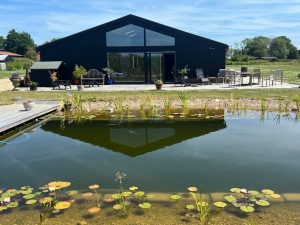
Nick Woolley’s professional work, in taking forward major. mixed-use development around the UK is highly relevant. He has also studied the design and construction of super-eco homes and their essential services, for nearly twenty years and, he has now built one for his family, with an EPC of 134. Nick’s appointment to the Policy Liaison Group for Future Homes marks a crucial step in addressing the challenges facing the UK housing sector. By collaborating with a diverse range of stakeholders, the PLG aims to drive meaningful change in housing standards, ensuring that homes across the nation meet the needs of current and future generations. The PLG for Future Homes is poised to make significant strides towards a more sustainable and affordable housing landscape.