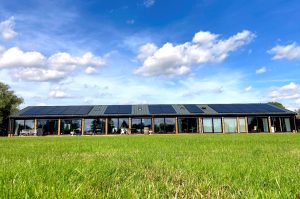
In the evolving landscape of sustainable architecture and innovative building practices, Pilgrims Barn stands out as a remarkable example of a Class Q conversion. This transformation from an agricultural structure to a beautiful, functional living space is not only a testament to modern design principles but also an embodiment of the pioneering work initiated by the internationally renowned Architects, Professors Brenda and Robert Vale, who brokered super-eco management solutions in their home, The New Autonomous House in 1991.
Class Q conversion refers to the regulatory framework that allows for the transformation of agricultural buildings into residential dwellings without the need for full planning permission. This initiative, introduced to promote the reuse of existing structures, is particularly relevant in rural settings where preserving the character of the landscape is essential. Pilgrims Barn exemplifies how such conversions can be executed with creativity and respect for the environment.
One of the exciting developments surrounding Pilgrims Barn is the scientific case study undertaken by Dr. Jerry Harrall, a respected colleague and friend of the barn’s creators, Nick and Saffy Woolley. Dr. Harrall sees Pilgrims Barn as an integral part of the ongoing promotion of sustainable practices in building design, a mission championed by the Professors Vale.
Dr. Harrall’s case study explores various dimensions of Pilgrims Barn, including its energy efficiency, use of materials, cost and integration into the surrounding ecosystem. By documenting these aspects, he provides a comprehensive analysis that can serve as a reference for future conversions and sustainable building projects.
Pilgrims Barn aligns perfectly with the Professor Vales’ vision. It serves as a living laboratory for the principles of sustainable design, showcasing how traditional structures can be revitalised for modern use.
The project stands as a beacon of what can be achieved through thoughtful design and a commitment to sustainability. The collaboration between Dr. Harrall and the principles laid out by the Professors Vale highlights the importance of scientific inquiry in advancing sustainable architecture and encouraging a harmonious relationship between humanity and the environment.. Pilgrims Barn is not just a building; it is a symbol of progress in the quest for a more sustainable future, inspiring architects, builders, and communities to embrace the potential within existing structures. Through such endeavours, the legacy of innovative thinkers like the Professors Vale continues to thrive,
A copy of Dr Harrall’s case study can be found here. Pilgrims Barn Case study 02.09.24
For more information or to discuss this project, please get in touch with Nick Woolley on 01638 721 540 and nick@woolley.co.uk.